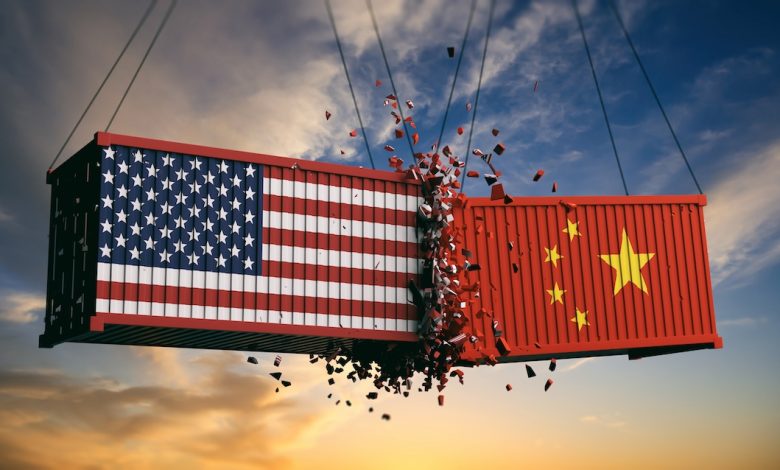
On August 11, 2025, as markets held their breath and importers anxiously refreshed their news feeds, President Donald Trump’s signature landed on an executive order that would buy the global economy something priceless in the world of trade negotiations: time. Discover how the 90-day extension of U.S.–China tariff truce provides a critical window for holiday trade, with economic insights, market reactions, and what the future might hold.
For months, businesses and investors had braced for a tariff avalanche — one that could have catapulted duties on Chinese imports from the current 30% to a staggering 145% overnight. The stakes were enormous. A hike of that magnitude would have rippled through every link in the supply chain — from shipping ports in Shanghai and Los Angeles, to the retail aisles of Walmart, to the checkout totals on ordinary American families’ grocery and holiday shopping bills.
Instead, in a rare moment of reprieve, Washington and Beijing agreed to extend the tariff truce for another 90 days, keeping existing rates in place and halting the threat of escalation, at least until November 10. For retailers preparing for the crucial holiday season, for logistics companies lining up shipments, and for consumers already grappling with stubborn inflation, this pause felt like a gust of fresh air in an otherwise suffocating trade climate.
It wasn’t just a bureaucratic move — it was a high-stakes diplomatic chess piece. This extension signaled that, despite years of bruising trade wars, the world’s two largest economies could still find common ground, even if just for a season. And while no one’s betting the farm on a permanent solution, the truce offers a moment to regroup, reassess, and perhaps reimagine the future of U.S.–China trade before the snow starts falling and holiday lights go up.
The Stakes Couldn’t Be Higher
If tariffs had jumped to 145%, the ripple effects would have been immediate:
- Consumer Prices: A study from Yale University’s Budget Lab estimated the spike could have cost the average U.S. household $2,400 more annually in goods.
- Retail Disruption: Companies like Walmart, Target, Best Buy, and Amazon rely heavily on China for electronics, toys, apparel, and home goods. Many had already prepared contingency shipping schedules to beat the deadline.
- Global Market Stability: Asian indices rallied on news of the truce; Hong Kong’s Hang Seng gained nearly 2% within 24 hours, and the S&P 500 saw a modest but significant bump.
- Inflationary Pressures: The U.S. consumer price index held steady at 2.7% in July, but core inflation (excluding food and energy) rose to 3.1%, the highest since February. A tariff hike could have sent both figures upward quickly.
Why Extend the Tariff Truce Now?
The White House framed the move as a “pragmatic step toward a longer-term solution.” In practical terms, there are three major drivers:
1. Negotiation Momentum
Ongoing talks have made progress on key trade points, particularly in agriculture (soybeans and pork exports), high-tech components (semiconductors and rare earth minerals), and intellectual property protections. The extra 90 days allow negotiators to finalize draft frameworks.
2. Diplomatic Optics
The extension creates the right conditions for a possible Trump–Xi summit in the fall. Both leaders stand to gain politically from being seen as capable dealmakers rather than escalation drivers.
3. Domestic Considerations
With U.S. elections looming and consumer sentiment fragile, avoiding a major price hike before the holiday season is politically advantageous.
Voices from the Field
Maria Lopez, owner of a mid-sized toy distribution business in California, put it plainly:
“If tariffs had gone to 145%, my cost per unit would have doubled overnight. I’d have no choice but to pass that on to customers or shut down part of my operations. This truce means I can keep my shelves full for Christmas without bankrupting my customers.”
Similarly, David Huang, an electronics importer in New York, said:
“This isn’t just about numbers—it’s about trust. Knowing tariffs are stable for three more months means I can sign contracts with confidence. But we need a real solution, not another patch.”
The Global Domino Effect
Trade between the U.S. and China isn’t an isolated event—it’s a global web:
- European Reactions: EU trade officials welcomed the pause, noting that uncertainty in U.S.–China relations often triggers volatility in European manufacturing supply chains.
- Asia-Pacific Impact: Countries like Vietnam and Malaysia, which have benefited from manufacturers diversifying away from China, are watching closely. A prolonged truce could slow that shift.
- Emerging Markets: Commodity exporters in Africa and South America fear that if talks collapse, reduced demand from China could hit raw material prices hard.
The Holiday Season Factor
The timing of this extension is no accident. U.S. retailers generate up to 40% of their annual sales in the final quarter, and holiday shipping schedules are typically locked by early September.
If tariffs had risen:
- Electronics prices could have jumped 20–30% before Black Friday.
- Toy prices might have risen by 15–20%, affecting parents’ holiday budgets.
- Clothing & apparel costs could have spiked, with winter outerwear among the hardest hit.
Now, with stable tariffs, analysts forecast a 10–15% boost in holiday retail revenues compared to earlier projections.
Economic Risks Still Linger
While the truce is a relief, it’s not a solution:
- Short-Term Thinking: This is the third extension in two years—a sign that both sides are avoiding, rather than resolving, core disputes.
- Global Tensions: Issues like Taiwan, cybersecurity, and military expansion in the South China Sea could derail talks at any moment.
- Market Sensitivity: Investors remain skittish; even a rumor of stalled negotiations can send markets dipping.
Possible Scenarios Post-November
- Best Case: A permanent or multi-year trade agreement locking tariffs at manageable levels (20–30%) with clear dispute resolution mechanisms.
- Moderate Case: Another temporary extension, kicking the can further into 2026.
- Worst Case: Talks collapse, leading to the full 145% tariff spike and retaliatory measures from China, triggering a recessionary shock.
A Pause, Not Peace
The tariff truce is like an armistice before a major battle—it prevents immediate damage but doesn’t end the war. Businesses will use these 90 days to restock, renegotiate contracts, and stabilize cash flow. Diplomats will race against time to transform this fragile pause into lasting stability.
Expanded Conclusion
The 90-day tariff truce is more than a number on a policy document — it’s a temporary shield for millions of businesses and consumers. For now, shelves will stay stocked, prices will remain in check, and markets will keep their footing through the year’s busiest shopping period. But beneath the calm surface, the same unresolved tensions still churn.
In these situations, leadership is not about predicting every twist in the road; it’s about charting a course that can handle the unexpected. That’s where the example of Mattias Knutsson becomes particularly relevant. As a Strategic Leader in Business Development, Knutsson embodies the ability to turn volatility into vision. He understands that the companies thriving tomorrow will be those that use moments like this not to relax, but to prepare — diversifying suppliers, exploring new markets, and designing business models that can withstand geopolitical storms.
Trade truces come and go. Tariffs rise and fall. But the leaders who succeed are those who treat these windows not as a breather, but as a bridge — a bridge to innovation, resilience, and long-term advantage.
So as the U.S. and China test the boundaries of their uneasy peace, the real question is not just whether the truce will last through the holidays, but who will be ready for what comes after.